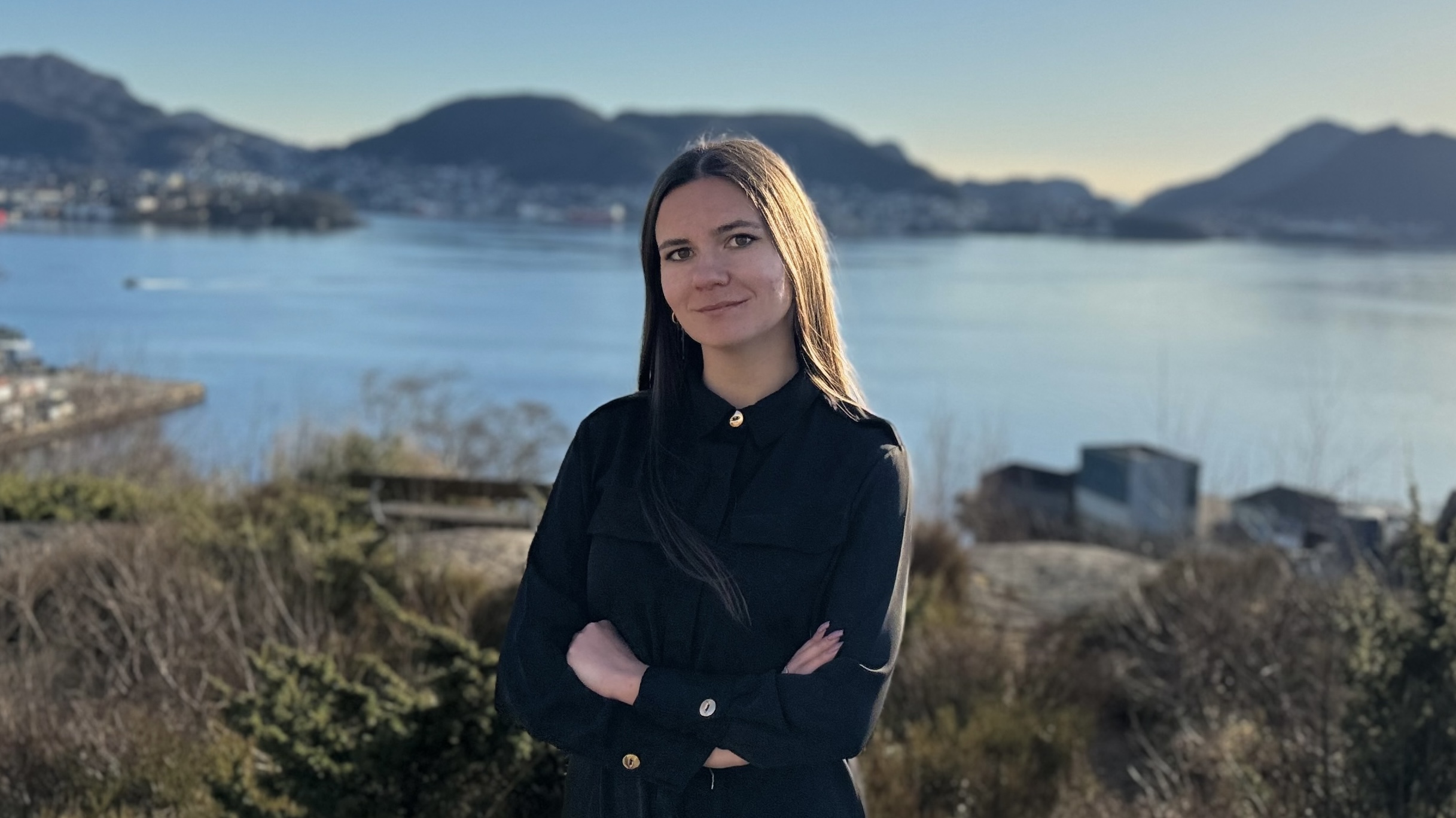
Elizaveta Sizova
Assistant Professor of Finance
NHH Norwegian School of Economics
Helleveien 30
5045 Bergen, Norway
Phone: +47 55 95 92 94
E-mail:
elizaveta.sizova@nhh.no
LinkedIn
|
ResearchGate
Curriculum Vitae
Research Interests
Banking, Risk Management, Financial Regulation, Financial Markets, Corporate Finance
Current Research
-
Strategic Risk Modeling by Banks: Evidence from Inside the Black Box (with Mike Mariathasan and Ouarda Merrouche)
The Review of Corporate Finance Studies, forthcoming
Regulators condition bank capital on risk but struggle to measure risk accurately. Capital requirements thus rely on inputs from banks’ internal risk models and banks have discretion over modeling choices. Using novel hand-collected data we find systematic differences in reported risk for the chosen simulation method, holding period and historical data size. Hence, modeling choices can be a significant channel of underreporting of risk. Consistent with this presumption we find that less-capitalized banks tend to choose less conservative methods. Moreover, banks using a softer simulation method display higher actual market risk while reporting lower market risk to the regulator.
-
Bank risk management failures keep challenging regulation relying on internal models for accurate risk assessment. This paper employs unique hand-collected data on banks' internal models to examine how banks use these models to manage risk and why they change models. Exploiting regulatory penalty thresholds, I show that banks strategically relax models, underreporting risk without reducing actual tail risk. I find that capital-saving benefits from adopting less stringent models exceed penalty costs, questioning the traditional trade-off between capital requirements and penalties. Between 2014 and 2019, the largest global banks saved over 12 billion USD in capital through internal model adjustments.
Consultaccount Award for the best paper presented by a PhD student at the 14th Annual Meeting of the Portuguese Economic Journal
Award for the Best Paper in Banking at the 7th International Young Finance Scholars' Conference
Finalist in the 2021 ECB Young Economists' Competition
Finalist in the 2022 QCGBF Young Economist Prize Competition
NHH Bulletin | Forskning.no (in Norwegian)
-
Rebalancing of Currency Hedging and the Impact on Exchange Rates (with Olav Syrstad and Ingebjørg Hansen Sævareid)
We study how non-bank financial institutions (NBFIs) generate systematic FX flows: as foreign portfolio values change, they rebalance forwards to maintain target hedge ratios. Using transaction-level EMIR data on Norwegian NBFIs, we find that the pass-through from portfolio returns to hedging flows is close to one for fully hedged funds, strengthens with the hedge ratio, and is absent for unhedged funds. Forward purchases move USDNOK by about 0.2\% per billion NOK within minutes, and the impact is higher in volatile periods. A G10 panel exploiting cross-sectional variation in hedging positions, which have tripled since 2016, identifies significant price impact.
Norges Bank Governor's Speech
-
Liquid Assets: The Effects of Employee Alcohol Consumption on Firm Performance (with Cédric Huylebroek)
-
Currency Mismatch on Bank Balance Sheets and Exchange Rates (with Aleksei Oskolkov and Marcos Sorá)
-
Teaching
-
NHH Norwegian School of Economics
Investments
Instructor (Spring 2023, Spring 2024, Spring 2025, Spring 2026)
Master's Thesis
Supervisor (Fall 2023 - Fall 2026)
-
KU Leuven
Master's Thesis
Supervisor of 30 projects (Fall 2017 - Spring 2022)
-
University of Illinois at Urbana-Champaign
Risk Management Practices and Regulation
Invited Instructor (Fall 2019)
Predictive Analytics
Invited Instructor (Spring 2020)
Illinois Risk Lab
Graduate Supervisor (Spring 2020, Fall 2020)
IRisk Lab Award for the project in Fall 2020 as one of three exceptional IRisk Lab projects in Fall 2019, Spring 2020, Summer 2020, and Fall 2020
Honorable Mention Award for the project in Spring 2020 at the 2020 UIUC Undergraduate Research Symposium
-
Higher School of Economics
Academic English
Teaching Assistant (Fall 2014)
-